Role: Director of Product and Motion Design (player/coach)
Collaborators: Sr. Product Designers (x2), Product Designer (contractor), Principal Motion Designer, Sr. UX Researcher, Marketing Designer (dotted line), Video Producer (dotted line)
Collaborators: Sr. Product Designers (x2), Product Designer (contractor), Principal Motion Designer, Sr. UX Researcher, Marketing Designer (dotted line), Video Producer (dotted line)
The Challenge of Missing Design Cohesion
Upon joining Animoto, I was charged with leading a design team in need of a unified design philosophy and approach. Though this team was comprised of incredibly talented and capable individuals, they hadn't had a design leader for the better part of a year and were in heavily siloed work environments. This led to inconsistencies in the platform user experience, an inefficient design system, and limited visibility into each other's work.
These inconsistencies extended beyond the product team, into a comprehensively disjointed design philosophy across the company. To solve this, I formulated and executed a plan to create a more unified design ecosystem at Animoto. The team consisted of three Sr. Product Designers, a Sr. UX Researcher, a Principal Motion Designer, and two dotted lines of a Marketing Graphic Designer, and a Senior Video Producer.
These inconsistencies extended beyond the product team, into a comprehensively disjointed design philosophy across the company. To solve this, I formulated and executed a plan to create a more unified design ecosystem at Animoto. The team consisted of three Sr. Product Designers, a Sr. UX Researcher, a Principal Motion Designer, and two dotted lines of a Marketing Graphic Designer, and a Senior Video Producer.
To foster a cohesive design team, I took on several key initiatives
Establishing Common Ground: I held individual meetings with team members to understand their perspectives and working styles. As an icebreaker, I utilized a Motivator Worksheet to get a baseline understanding of each team member's working styles, motivations and needs from a manager. I also filled out this worksheet to help foster mutual understanding and transparency for my working methods.
After the 1:1's, I encouraged them to share in a larger team meeting, at their comfort, the results from the Motivator Worksheet. This exercise helped facilitate a better understanding of individual needs amongst the design team at large.
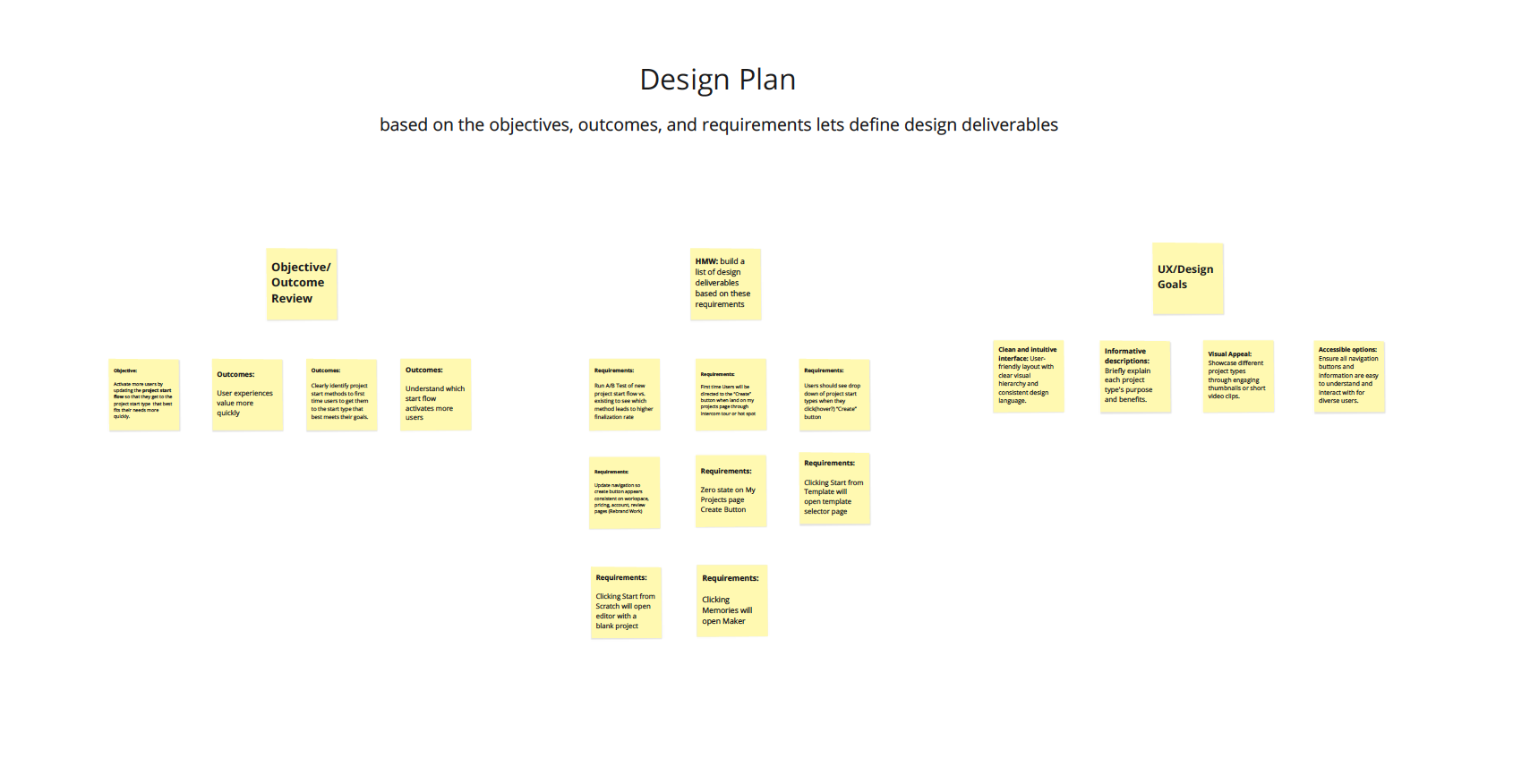
Championing Collaboration and Visibility: We fostered collaboration and transparency by establishing a central design and research JIRA board. This board, coupled with recurring global design sprint kickoffs, provided visibility into ongoing projects across teams, and helped identify opportunities for collaboration. We were also able to identify and tackle are large portion of a growing backlog of design debt to resolve.
We implemented a series of regular design meetings to promote knowledge sharing and provide a platform for ongoing professional development. These meetings included:
Weekly design critiques for feedback and increased design visibility.
Bi-weekly sprint kickoffs to discuss individual team member sprint allocations.
Monthly design meetings to showcase work, explore industry trends, and facilitate professional development for the design team.
Quarterly design retros for reflection and continuous improvement.
Outcomes from Design Unification
As a team, we workshopped different design practices and methodologies that worked for our team. Once we were aligned, I documented everything in a design charter. The charter helped foster a better internal understanding of how cross-functional teams can interact with design. Customer-facing, it eventually helped us give our users a more consistent experience, resulting in a more streamlined and cohesive end-to-end user journey.
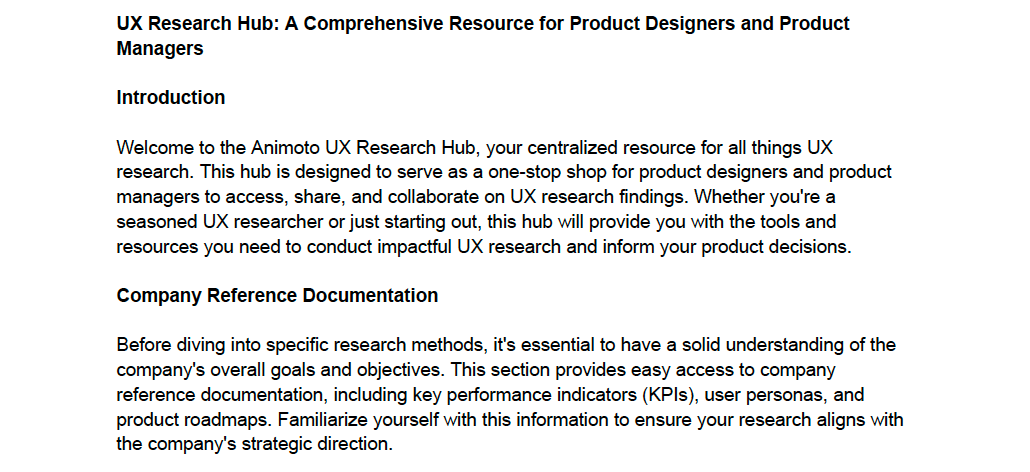
User Research Optimization and Resource Efficiency: Working with the Sr. UX Researcher, we created a research hub to establish working norms and practices for how Animoto conducts research, as well as a centralized location for visibility into research participants. Additionally, by transitioning from a siloed to a more universal approach to research, we identified redundancies in UX research tools Animoto was paying for, allowing us to consolidate and save Animoto thousands of dollars.
Note: The image to the right is a snapshot of the Research Hub. Please reach out using the contact form for the full version.
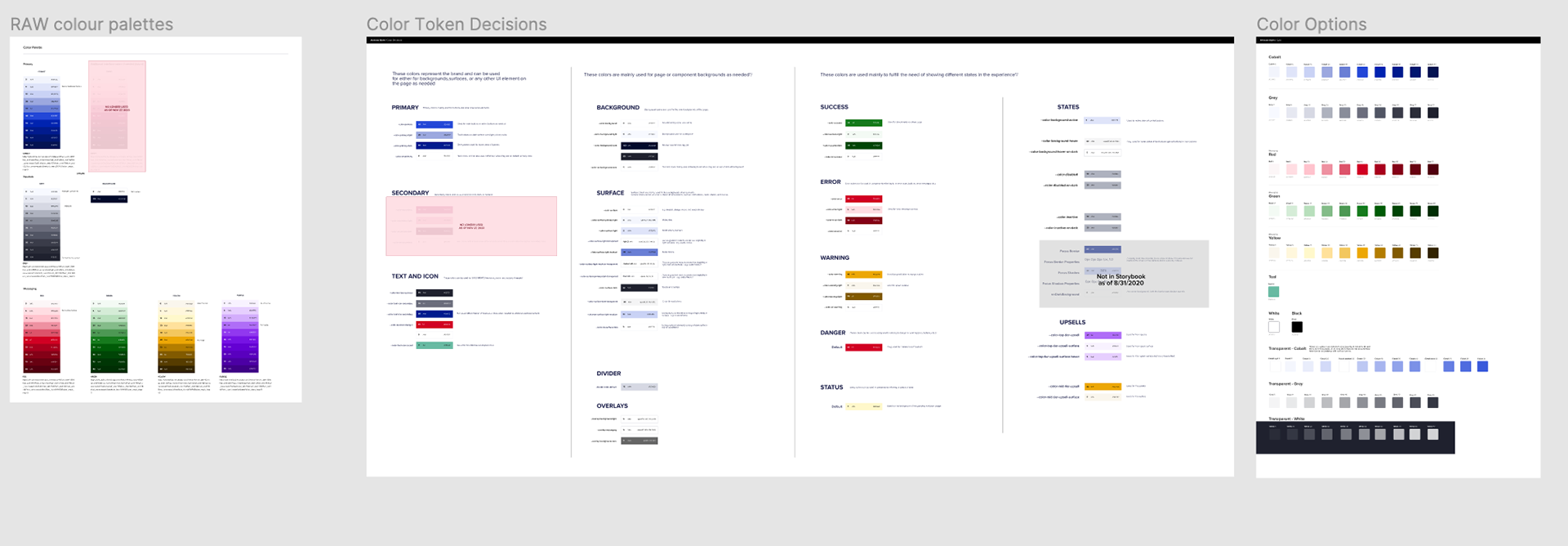
Optimized Design System: Proactive collaboration led to the optimization of Animoto's design system. We refactored old components and deleted duplicative ones. After that we started to apply more efficient features like variables and slot components. This led to a 25% increase in design output efficiency. We also established Internal-facing annotation components, which helped with parity between the design system and the React component library. Lastly, we established a flow chart outlining the steps needed before creating a new component, helping eliminate duplicative components and adding more consistency to the user experience.
Enhanced Team Satisfaction: A pulse survey revealed a 25% increase in workplace satisfaction within the design team, which had been struggling the prior year. There was a level of connectivity, communication, and unification on the team that had been missing for a very long time. The team had a much stronger sense of purpose and their role in the bigger picture of Animoto.